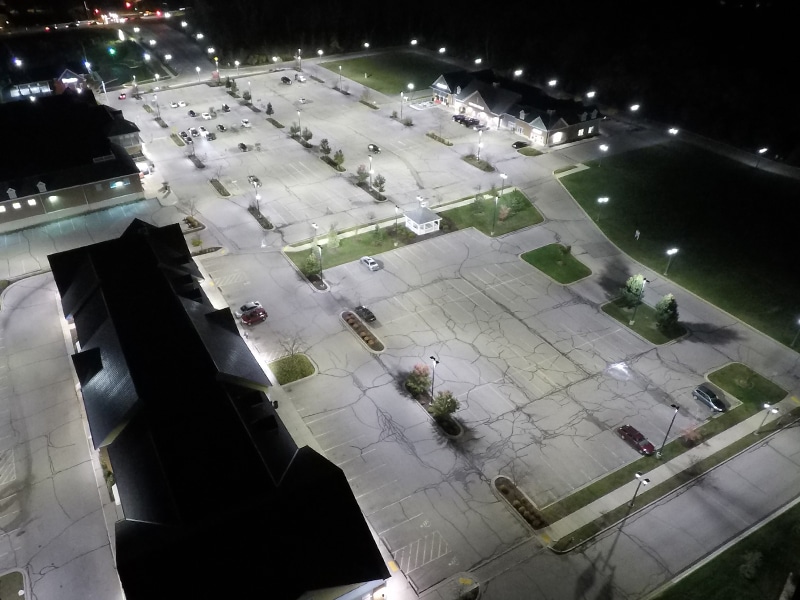
Managing exterior lighting at one property is relatively straightforward. Managing lighting across dozens or hundreds of locations creates a much larger operational challenge.
Small outages, inconsistent equipment, aging fixtures, unclear site conditions, and repeated service calls can quickly develop into expensive maintenance patterns across an entire portfolio.
For property managers, real estate investment trusts, retail portfolios, industrial facilities, and multi-property owners, lighting maintenance is often one of the least predictable operating expenses. Emergency dispatches, inconsistent contractors, aging equipment, and limited visibility into property conditions can all contribute to rising costs.
Direct answer: The most effective way to reduce lighting maintenance costs across multiple properties is to replace reactive repairs with a managed lighting maintenance program. Scheduled inspections, standardized equipment, strategic LED upgrades, smart lighting controls, WLS Connect monitoring, and centralized reporting allow property teams to identify problems earlier and plan repairs before they become expensive emergencies.
Why Lighting Maintenance Costs Rise Across a Multi-Property Portfolio
Lighting maintenance costs typically rise because teams are forced to respond to failures after they occur. Every outage becomes a separate service call, every property requires a different solution, and each repair includes coordination, travel, diagnostic labor, equipment, materials, and invoicing.
The problem is not limited to the cost of a replacement fixture or technician. The larger issue is the lack of control and visibility across the portfolio.
1. Emergency Lighting Service Calls
Emergency repairs are typically the most expensive way to maintain a commercial lighting system. An urgent lighting service call may involve:
- Premium or after-hours labor rates
- Multiple technician dispatches
- Bucket trucks or specialty equipment
- Overtime charges
- Temporary lighting or safety measures
- Administrative time coordinating repairs
When maintenance is reactive, every outage becomes urgent. Instead of repairing multiple fixtures during one planned visit, organizations pay for repeated truck rolls to individual properties. Across dozens or hundreds of locations, those costs add up quickly.
2. Inconsistent Lighting Equipment
Commercial property portfolios often include years of renovations, tenant improvements, emergency repairs, ownership changes, and vendor substitutions. Over time, this can leave each property with a different combination of equipment.
- Multiple fixture manufacturers
- Different fixture models and wattages
- Inconsistent color temperatures
- Different driver and control technologies
- Various mounting configurations
- Inconsistent warranty coverage
This lack of standardization increases inventory requirements, slows repairs, complicates warranty tracking, and makes long-term budgeting more difficult.
Establishing an approved lighting equipment standard across the portfolio can make repairs faster, simplify purchasing, and create a more consistent appearance across properties.
3. Lack of Preventive Lighting Maintenance
Most commercial lighting systems do not fail all at once. Components gradually deteriorate over time.
Drivers begin to fail. Photocells lose accuracy. Surge protection degrades. Electrical connections loosen. Pole handholes corrode. Underground wiring becomes damaged. Dirt and debris collect on fixtures and reduce light output.
Without routine inspections, these smaller issues can develop into more expensive repairs. Preventive lighting maintenance identifies problems earlier, when corrective work is generally faster, less disruptive, and more cost-effective.
Why Reactive Lighting Maintenance Costs More
Consider a portfolio of 75 shopping centers. During one month, five properties report parking lot lighting outages, four experience wall-pack failures, three require emergency nighttime service, and two have underground electrical issues.
That creates 14 separate service events. Each event may include:
- Dispatch coordination
- Travel and mobilization
- Diagnostic labor
- Equipment rental
- Repair documentation
- Administrative processing
- Separate invoicing
Why does reactive lighting maintenance cost more? Reactive maintenance treats every lighting problem as a separate event. Planned maintenance allows repairs to be grouped, reduces repeat truck rolls, improves technician efficiency, and gives property teams greater control over labor, materials, and scheduling.
How a Managed Lighting Maintenance Program Reduces Costs
A managed lighting maintenance program changes the process from chasing individual outages to actively managing the lighting system as a portfolio asset.
Properties receive scheduled inspections, documented reporting, proactive repair recommendations, and consistent service standards across multiple locations. The result is fewer emergency calls, longer equipment life, and more predictable operating expenses.
Schedule Routine Property Inspections
Routine inspections allow lighting problems to be identified before they generate tenant complaints, customer concerns, or safety issues.
A commercial lighting inspection may identify:
- Parking lot pole-light outages
- Building-mounted fixture failures
- Wall-pack and canopy-light outages
- Corrosion or structural pole concerns
- Electrical deficiencies
- Photocell failures
- Time-clock or scheduling problems
- Underground wiring concerns
- Damaged handholes or pole bases
- Potential safety hazards
Early identification gives property teams time to prioritize repairs, combine work, and address conditions before they become urgent.
Centralize Reporting Across Every Property
One of the greatest challenges in multi-property lighting maintenance is visibility. Property teams need to know what is happening, where it is happening, what has already been repaired, and what should be planned next.
A centralized lighting maintenance program can provide:
- Fixture inventories
- Property-specific outage maps
- Inspection photographs
- Repair histories
- Lighting asset records
- Maintenance recommendations
- Warranty information
- Budget and capital-planning data
With consistent reporting, managers no longer have to guess which properties need attention. They can evaluate the portfolio more clearly and make better maintenance decisions.
Group Repairs Into Planned Service Visits
Grouping multiple repairs into scheduled maintenance visits helps reduce fixed mobilization and dispatch costs.
Planned repairs can provide:
- Fewer truck rolls
- Lower mobilization costs
- More efficient labor use
- Improved material planning
- Better scheduling
- Reduced disruption at the property
- Faster completion of multiple repairs
This operational change can significantly reduce annual lighting maintenance costs across a multi-property portfolio.
Standardize Lighting Equipment Across the Portfolio
One of the most effective ways to reduce long-term lighting costs is to establish portfolio-wide equipment standards.
Instead of supporting dozens of fixture types and replacement components, property teams can create an approved equipment strategy that may include:
- A standard parking lot fixture family
- An approved wall-pack series
- Consistent color temperatures
- Approved drivers and surge protection
- Standard mounting configurations
- Compatible lighting controls
- Defined warranty requirements
The benefits are practical. Standardization can support faster repairs, lower inventory requirements, easier warranty management, more consistent lighting performance, and simpler purchasing.
Upgrade Aging HID Lighting Systems to LED
Many commercial properties still operate high-pressure sodium, metal halide, or other high-intensity discharge lighting systems.
These older technologies require recurring maintenance, including:
- Lamp replacements
- Ballast replacements
- Capacitor replacements
- Ignitor replacements
- Frequent troubleshooting
- Repeated bucket-truck service
Modern LED fixtures eliminate many of these recurring maintenance items. A properly designed LED lighting upgrade can reduce energy consumption and maintenance frequency while improving visibility, reliability, light quality, and overall property appearance.
Portfolio owners do not necessarily need to upgrade every property at once. Inspection data and repair histories can help identify the properties with the greatest operating costs, highest failure rates, or oldest equipment so capital can be prioritized effectively.
Evaluate Aging LED Fixtures Before Widespread Failures
Not every LED fixture should remain in service simply because it still produces light.
Many commercial properties converted to LED years ago, and early-generation LED fixtures may now be approaching the end of their useful operating life.
Aging LED fixtures may continue operating while experiencing:
- Declining light output
- Frequent driver failures
- Discoloration or inconsistent color temperature
- Obsolete replacement components
- Expired manufacturer warranties
- Reduced energy efficiency
- Limited compatibility with modern controls
- Increasing service frequency
Today’s premium LED fixtures can offer improved driver technology, stronger optical performance, better thermal management, enhanced surge protection, field-serviceable components, compatibility with connected controls, and more comprehensive warranty coverage.
When should aging LED fixtures be replaced? Aging LED fixtures should be evaluated before widespread failures occur. When light output is declining, drivers are failing repeatedly, replacement parts are obsolete, or warranties have expired, planned fixture replacement may cost less over the life of the system than recurring repairs.
Use Smart Lighting Controls to Improve Maintenance
Smart lighting controls can help reduce maintenance costs by giving property teams greater visibility into lighting-system performance.
Depending on the system, connected lighting controls may support:
- Remote lighting schedules
- Individual fixture or pole monitoring
- Automatic communication-loss notifications
- Energy reporting
- Adaptive dimming
- Daylight-based control
- Occupancy-based control
- Remote operating verification
Instead of discovering outages through tenant complaints, facility teams can identify potential issues earlier. When controls are paired with a managed maintenance program, teams can verify operating conditions, prioritize repairs, and reduce unnecessary troubleshooting visits.
Gain Portfolio Visibility With WLS Connect
One of the largest challenges property managers face is knowing what is happening across dozens or hundreds of properties.
Without connected visibility, lighting issues may go unnoticed until a tenant reports an outage, a customer submits a complaint, or a scheduled inspection discovers the condition.
WLS Connect helps transform exterior lighting from a collection of isolated assets into a connected system that can be monitored, managed, and optimized across a portfolio.
WLS Connect can help property teams:
- Monitor the operating status of individual lighting assets
- Receive notifications when fixtures or controllers stop communicating
- Adjust lighting schedules remotely
- Organize fixtures by property, parking lot, or lighting zone
- Reduce unnecessary site visits and troubleshooting
- Verify completed repairs remotely
- Improve maintenance planning across multiple properties
- Collect operating data for long-term capital planning
Instead of waiting for a lighting failure to become a service call, maintenance teams gain actionable information that can help them address issues before they affect tenants, customers, employees, or property operations.
How does WLS Connect reduce lighting maintenance costs? WLS Connect provides fixture-level visibility, operating notifications, remote scheduling, repair verification, and historical data. These capabilities help property teams prioritize repairs, reduce unnecessary truck rolls, and improve maintenance planning across multiple locations.
Track Lighting Maintenance Data Across Every Property
The most successful property portfolios make maintenance decisions using operating data rather than responding only to emergencies.
Useful lighting maintenance metrics may include:
- Number of repairs per property
- Annual lighting maintenance cost
- Average service response time
- Fixture age and installation date
- Warranty status
- Energy consumption
- Repeat failure locations
- Emergency service frequency
- Cost per lighting asset
- Estimated remaining equipment life
Over time, this information can identify properties nearing replacement cycles, fixture models with frequent failures, budget priorities, and capital-improvement opportunities.
A data-driven lighting maintenance strategy provides property teams with a clearer understanding of where maintenance dollars are being spent and where future investment will have the greatest impact.
What Does a Managed Lighting Maintenance Program Include?
Every commercial portfolio has different requirements, but a comprehensive lighting maintenance program may include:
- Scheduled day or nighttime lighting inspections
- Fixture outage mapping
- Preventive maintenance
- Priority service response
- Repair coordination
- Fixture inventory management
- LED upgrade planning
- Photometric lighting evaluations
- WLS Connect monitoring
- Smart lighting control strategies
- Budget forecasting
- Nationwide contractor coordination
- Centralized portfolio reporting
Instead of coordinating multiple contractors across different markets, property managers gain one lighting maintenance partner with consistent processes, standardized reporting, and greater portfolio visibility.
The Long-Term Financial Impact of Proactive Lighting Maintenance
The benefits of moving from reactive repairs to a managed lighting program extend beyond the individual maintenance invoice.
Potential long-term advantages include:
- Fewer emergency service calls
- Lower annual maintenance costs
- More predictable operating budgets
- Longer equipment life
- Reduced lighting downtime
- Improved property appearance
- Enhanced customer and employee safety
- Greater consistency across locations
- Reduced administrative workload
- Better capital-planning decisions
A proactive strategy allows maintenance dollars to be directed toward the properties and assets where they will provide the greatest operational value.
Build a More Predictable Lighting Maintenance Strategy
Reducing lighting maintenance costs across multiple properties is not about delaying necessary repairs or reducing maintenance standards. It is about replacing unpredictable service patterns with proactive asset management.
By combining preventive inspections, standardized equipment, strategic LED upgrades, WLS Connect technology, smart lighting controls, and centralized reporting, organizations can reduce emergency calls, improve lighting performance, and create more predictable maintenance budgets.
Whether a portfolio includes 10 properties or several hundred locations, a managed lighting maintenance program provides the visibility, consistency, and long-term cost control needed to maximize the value of each lighting asset while supporting safer, better-illuminated properties.
Frequently Asked Questions
How can I reduce lighting maintenance costs across multiple properties?
The most effective strategy combines preventive maintenance, standardized lighting equipment, strategic LED upgrades, centralized reporting, smart lighting controls, and a managed lighting maintenance program. This approach reduces emergency repairs while improving budgeting and operational efficiency.
What is a managed lighting maintenance program?
A managed lighting maintenance program provides scheduled inspections, outage reporting, preventive maintenance, repair coordination, asset management, and centralized oversight for one or multiple commercial properties.
Why are emergency lighting repairs more expensive?
Emergency lighting repairs may involve premium labor rates, after-hours dispatches, repeated truck rolls, specialty equipment, temporary safety measures, and unplanned scheduling. These factors make emergency work more expensive than grouped, planned maintenance.
Should older LED fixtures be replaced if they still work?
In some cases, yes. Aging LED fixtures may still produce light while experiencing declining output, driver failures, obsolete components, expired warranties, or reduced efficiency. A planned replacement may be more economical than continuing to repair aging fixtures individually.
How does WLS Connect help reduce maintenance costs?
WLS Connect provides visibility into lighting-system performance by monitoring operating status, identifying communication losses, enabling remote scheduling, and helping maintenance teams prioritize and verify repairs. This can reduce unnecessary truck rolls and improve portfolio-wide planning.
Does upgrading from HID lighting to LED reduce maintenance costs?
Yes. LED fixtures generally provide longer operating life and eliminate common HID maintenance items such as lamps, ballasts, ignitors, and capacitors. This can significantly reduce service frequency while also lowering energy consumption.
How does standardizing lighting equipment reduce costs?
Standardizing fixture types, drivers, controls, color temperatures, and components simplifies inventory management, speeds up repairs, improves warranty tracking, reduces training requirements, and lowers long-term maintenance costs.
Reduce Lighting Maintenance Costs Across Your Portfolio
Managing lighting across multiple properties does not have to mean accepting unpredictable maintenance costs.
Whether your portfolio includes retail centers, industrial facilities, office parks, distribution centers, or mixed-use developments, WLS Lighting & Electrical can help develop a proactive maintenance strategy that combines scheduled inspections, lighting repairs, LED upgrades, WLS Connect monitoring, and nationwide service support.
Contact WLS Lighting & Electrical to learn how a managed lighting maintenance program can improve portfolio visibility, reduce operating costs, and maximize the performance of your exterior lighting assets.